
A smoke detector is one of those things you never think about until you desperately need it. Whether you are moving into a new home, replacing aging alarms, or upgrading to meet current safety codes, choosing the right detector can feel surprisingly complicated. From hardwired units to sealed 10-year battery models, the options span a wide range of features and installation requirements.
This guide covers eight highly rated smoke detectors suited for different home types and budgets. Whether you are a homeowner, renter, or property manager, you will find a reliable pick here. For more home protection resources, browse our full Home Safety & Security category.
Safety note: smoke and carbon monoxide detectors are life-safety devices, so correct installation and upkeep matter as much as the model you pick. Test every unit monthly, replace batteries or the full unit as the manufacturer directs, and follow local fire code guidance for placement, typically on every level of the home, inside each bedroom, and outside sleeping areas. In the US, residential smoke alarms are evaluated against the UL 217 standard and combination carbon monoxide alarms against UL 2034. Check the specific certification listed on the model you choose rather than assuming it carries over across an entire product line.

Pros
- Precision Detection sensing reduces frustrating cooking-related false alarms
- Tool-free, battery-only setup makes installation accessible for all skill levels
- Front-access battery door simplifies replacements without removing the unit from the ceiling
- End-of-life alert ensures you always know when protection needs to be renewed
- Compact and lightweight design fits unobtrusively in kitchens, hallways, and bedrooms
Cons
- Ionization sensor technology is generally less responsive to slow, smoldering fires compared to photoelectric sensors
- Single-unit packaging means multi-room protection requires purchasing several units
- Battery life and replacement costs add up over time compared to hardwired alternatives
The First Alert SMI100 is a battery-powered smoke alarm aimed at homeowners, renters, and anyone looking for a straightforward, reliable fire safety solution without the need for professional installation. It is an entry-level yet well-engineered unit that prioritizes ease of use and everyday practicality, making it a strong fit for kitchens, hallways, bedrooms, and living areas.
The standout feature is First Alert's Precision Detection technology, which is designed to comply with updated industry standards and significantly reduce nuisance alarms caused by cooking smoke and steam. In real-world use, this means fewer frustrating false alerts while still maintaining the early-warning sensitivity needed during an actual fire emergency. The ionization sensor at its core is effective at detecting fast-flaming fires, which are among the most common household fire types.
Installation is refreshingly simple. Because the unit runs entirely on battery power, there is no wiring involved and no need to call an electrician. The front-access battery compartment is a thoughtful design choice, allowing you to swap out batteries without detaching the alarm from the ceiling mount. The unit itself is compact at 5.4 inches wide and under 2 inches tall, with a clean white finish that suits most interiors without drawing attention.
On the downside, ionization-based detectors are generally considered less effective at detecting slow, smoldering fires compared to photoelectric models. Buyers with specific concerns about smoldering fire risks may want to consider pairing this unit with a photoelectric detector. Additionally, ongoing battery costs and the single-unit packaging mean that equipping a whole home requires a bit more investment upfront.
Overall, the First Alert SMI100 delivers reliable, fuss-free smoke detection at an accessible price point. Its nuisance-alarm reduction, simple maintenance, and end-of-life warning system make it one of the more thoughtfully designed basic smoke alarms on the market. For budget-conscious buyers who want dependable protection without complex installation, this alarm is a confident recommendation.
The First Alert SMI100 is powered entirely by battery, eliminating any hardwiring requirements. It uses an ionization sensor type, which is optimized for detecting fast-flaming fires with rapid heat and visible flames.
The unit measures 5.4 inches in diameter and 1.9 inches in height, weighing just 11.2 ounces, making it one of the more compact options in its category. Its white finish is neutral and suits most ceiling and wall surfaces.
Operating humidity range is 10 to 95 percent relative humidity, giving it broad environmental compatibility for use in various rooms including bathrooms and kitchens. The alarm includes a test and silence button on the face of the unit for convenient access.
An end-of-life warning signal is built in to notify users when the alarm unit itself has reached the end of its serviceable life and requires full replacement, not just a battery swap. This is a critical safety feature often overlooked in budget smoke detectors.
When choosing a smoke alarm, the sensor type is one of the most important decisions. Ionization detectors like the SMI100 are excellent at catching fast-flaming fires, which are common in living rooms and kitchens. If your primary concern is smoldering fires, such as those that can start in bedrooms from upholstered furniture, a photoelectric detector or a dual-sensor model may be a better fit.
For renters or those in apartments, a battery-powered alarm like the SMI100 is ideal since it requires no modifications to walls or ceilings. Homeowners covering multiple rooms should plan on purchasing one alarm per room, plus one for each hallway, to meet most fire safety guidelines. Discounts are often available when buying multi-packs from the same product line.
Maintenance is straightforward: test the alarm monthly using the built-in test button, replace batteries as prompted, and replace the entire unit when the end-of-life warning sounds. Most smoke alarms, including this one, have a recommended service life of around 10 years. Keeping a record of your installation date is a simple habit that ensures your home stays protected over the long term.

Pros
- Batteries are pre-included and easy to activate right out of the box
- Straightforward installation with a flexible mounting bracket that accommodates wide rotation alignment
- Interconnect capability covers large homes with up to 12 smoke alarms and 6 additional compatible devices
- Highly rated by verified buyers for ease of installation and reliable performance
- Dust cover protects the unit during construction or renovation projects
Cons
- No mounting screws or bolts included, requiring separate hardware for some installation scenarios
- Ionization-only sensor may be slower to detect slow, smoldering fires compared to photoelectric models
- Adapter brackets sold separately may be needed when replacing older third-party detector brands
The First Alert BRK 9120B is a hardwired smoke alarm designed for homeowners, landlords, and contractors who need dependable whole-home fire protection without the hassle of complex installation. Sold in a 6-pack with batteries included, it is purpose-built for outfitting multiple rooms in a single purchase, making it one of the most practical bundles in its category.
At its core, the 9120B uses an ionization sensor that excels at detecting fast-flaming fires, the type that spread rapidly through combustible materials. Its standout interconnect feature allows up to 18 units to be linked together, so when one alarm triggers, every alarm in the network sounds simultaneously. This whole-home alert capability is a critical safety advantage in larger residences where a fire in one room might not be heard from another.
Installation is genuinely straightforward thanks to the redesigned mounting bracket, which supports a wide rotation range for perfect alignment on any ceiling or wall surface. The side-load battery compartment means battery replacements can be done quickly without fully removing the unit. The tamper-resistant locking pins and a latching alarm indicator, which shows exactly which unit initiated the alert, add both security and practical utility for multi-alarm setups.
On the downside, no mounting screws are included in the package, which can catch installers off guard, particularly when replacing detectors from other brands. Users replacing older Firex or similar units may also need to purchase separate adapter brackets. Additionally, ionization sensors, while excellent for flaming fires, are generally less responsive to slow, smoldering fires, so pairing these with photoelectric alarms in bedrooms is worth considering for comprehensive coverage.
Overall, the First Alert BRK 9120B 6-pack delivers excellent value, strong real-world performance, and a genuinely easy installation experience. With a high customer satisfaction rating and a trusted brand reputation in home safety, this is a top-tier choice for anyone upgrading or building out a hardwired smoke alarm system across an entire home.
Model: BRK 9120B (Mfr Part: 9120BFF-6)
Brand: First Alert
ASIN: B07B4CGQLT
Pack Quantity: 6 units
Power Source: 120-Volt AC hardwired with 9-volt battery backup
Sensor Type: Ionization
Alarm Output: 85 dB audible alarm
Operating Humidity: 10 to 95% RH
Interconnect Capacity: Up to 18 devices (12 smoke alarms, 6 CO, heat, relay, or bell devices)
Color: White
Dimensions: 2.2 inches D x 5.6 inches W x 5.6 inches H
Item Weight: 9.6 ounces per unit
Included in Box: 6 x BRK 9120B smoke alarms, 6 x mounting brackets with hardware, 6 x 9-volt batteries
Warranty: 10-year limited
UPC: 029054019387
When shopping for hardwired smoke alarms, the most important factors to consider are sensor type, interconnect capability, and ease of installation. The BRK 9120B covers all three well, but understanding your home's specific needs will help you decide if it is the right fit.
Ionization sensors, like the one in the 9120B, are best suited for detecting fast-flaming fires. If your primary concern is smoldering fires, such as those that can start in upholstered furniture or bedding, consider pairing these units with photoelectric smoke alarms in sleeping areas. Many fire safety experts recommend a combination of both sensor types throughout the home.
For homes being built or renovated, the included dust cover is a thoughtful addition that protects the sensor during construction. Contractors will appreciate the fast-install mounting system and the 6-pack bundle format, which reduces per-unit cost and streamlines procurement for full-home installations.
If you are replacing older detectors from brands like Firex or Kidde, check whether your existing wiring harness is compatible with the 9120B connector before purchasing. Adapter brackets are available separately and are inexpensive, but it is worth planning for this ahead of time. Also, remember to pick up mounting screws if your installation surface requires them, as these are not included in the box.
Placement matters as much as the alarm itself. Install units at least 10 feet from the kitchen or stove to reduce nuisance alarms, and mount them on the ceiling or high on a wall, no more than 10 inches from the top. With proper placement and interconnection, the BRK 9120B system provides comprehensive, whole-home coverage that meets modern fire safety standards.

Pros
- Faster-than-average smoke detection adds a meaningful safety margin in real emergencies
- Reduced false alarms make it far less disruptive in kitchens and steam-prone areas
- Tool-free, no-wiring installation is ideal for renters and non-technical users
- 10-year warranty reflects confidence in long-term product durability
- Meets current UL 217 10th Edition standards, keeping homes up to code
Cons
- Battery-only power means you must remember to replace AA batteries periodically to maintain protection
- No interconnect capability mentioned, so multiple units in larger homes will not trigger simultaneously
- The 4-inch compact size may limit detection range in very large or open-plan rooms
The Kidde 10SDR is a compact, battery-powered smoke detector built for homeowners, renters, property managers, and contractors who need reliable fire safety without the complexity of hardwired systems. At just 4 inches wide and weighing under 7 ounces, it is designed to fit unobtrusively in bedrooms, hallways, kitchens, and small apartments where space and simplicity matter.
The standout feature of the 10SDR is its photoelectric sensing technology, which Kidde claims delivers over 25% faster smoke detection compared to conventional models. In real-world use, this translates to earlier warnings during slow-smoldering fires, which are among the most dangerous because they can develop undetected for extended periods. The advanced sensor also helps distinguish genuine smoke from everyday steam or cooking vapors, reducing the frustrating false alarms that cause many people to disable their detectors entirely.
When an alarm is triggered, the 10SDR responds with an 85 dB siren loud enough to wake most adults from deep sleep, accompanied by a red LED light that provides a clear visual cue. The unit runs on two standard AA batteries that are included in the box, making setup genuinely plug-and-play with no tools or electrical knowledge required. The device is also certified to UL 217 10th Edition and FCC standards, ensuring it meets the latest compliance requirements for residential environments.
On the downside, being battery-only means users must stay on top of battery maintenance to ensure continuous protection. The product listing does not mention wireless interconnect functionality, which means in larger homes, multiple units will not trigger in unison if one detects smoke. These are trade-offs worth considering for buyers with bigger properties or those who prefer a networked alarm system.
Overall, the Kidde 10SDR earns its strong customer rating as a dependable, easy-to-install smoke alarm at an accessible price point. Its combination of faster detection, false-alarm reduction, a 10-year warranty, and current safety certifications makes it a smart pick for anyone seeking straightforward, code-compliant fire protection for a home or small space.
Model: Kidde 10SDR | Sensor Type: Photoelectric | Power Source: 2x AA Batteries (included) | Alarm Output: 85 dB
Dimensions: 1.88 inches deep x 4 inches wide x 4 inches high | Weight: 6.24 ounces | Color: White | Operating Humidity: Up to 95% RH, non-condensing
Upper Temperature Rating: 100 degrees Fahrenheit | Certifications: UL 217 10th Edition, FCC | Warranty: 10-Year Limited | Category: Smoke Detectors and Fire Alarms
When shopping for a smoke detector, the sensor type is one of the most important decisions. Photoelectric sensors like the one in the Kidde 10SDR are best at detecting slow-smoldering fires, which are common in living rooms and bedrooms. Ionization sensors, by contrast, respond faster to fast-flaming fires. For comprehensive coverage in a larger home, consider pairing photoelectric detectors in sleeping areas with ionization models near the kitchen or garage.
Battery-powered detectors like the 10SDR are ideal for renters, older homes without existing wiring, or any room where running electrical lines is impractical. The trade-off is that you must test the unit monthly and replace batteries as needed. Many experts recommend replacing alkaline AA batteries annually even if the low-battery warning has not yet triggered, to avoid gaps in protection.
For homes with multiple floors or bedrooms, check whether your chosen detector supports interconnect wiring or wireless interconnect. If one alarm sounds, interconnected units will all sound simultaneously, ensuring everyone in the home is alerted regardless of where the fire starts. If interconnect is a priority, verify compatibility before purchasing. The 10SDR is an excellent standalone unit, and pairing several of them across a home provides solid room-by-room coverage at a very reasonable cost per unit.
Pros
- Easy installation with the included Quick Connect Plug, compatible with most existing hardwire setups and no rewiring needed
- Precision Detection significantly reduces nuisance alarms from cooking steam and smoke while remaining sensitive to actual fire conditions
- Battery backup ensures continuous protection during power outages
- Interconnect feature links all compatible alarms for whole-home simultaneous alerting
- Loud 85-decibel alarm and clear visual indicator make it easy to detect and locate an emergency quickly
Cons
- The always-on green status indicator light can be noticeably bright in dark rooms, which may be disruptive in bedrooms
- Adapters for replacing certain older brands such as Firex may need to be purchased separately, adding a small extra cost and step
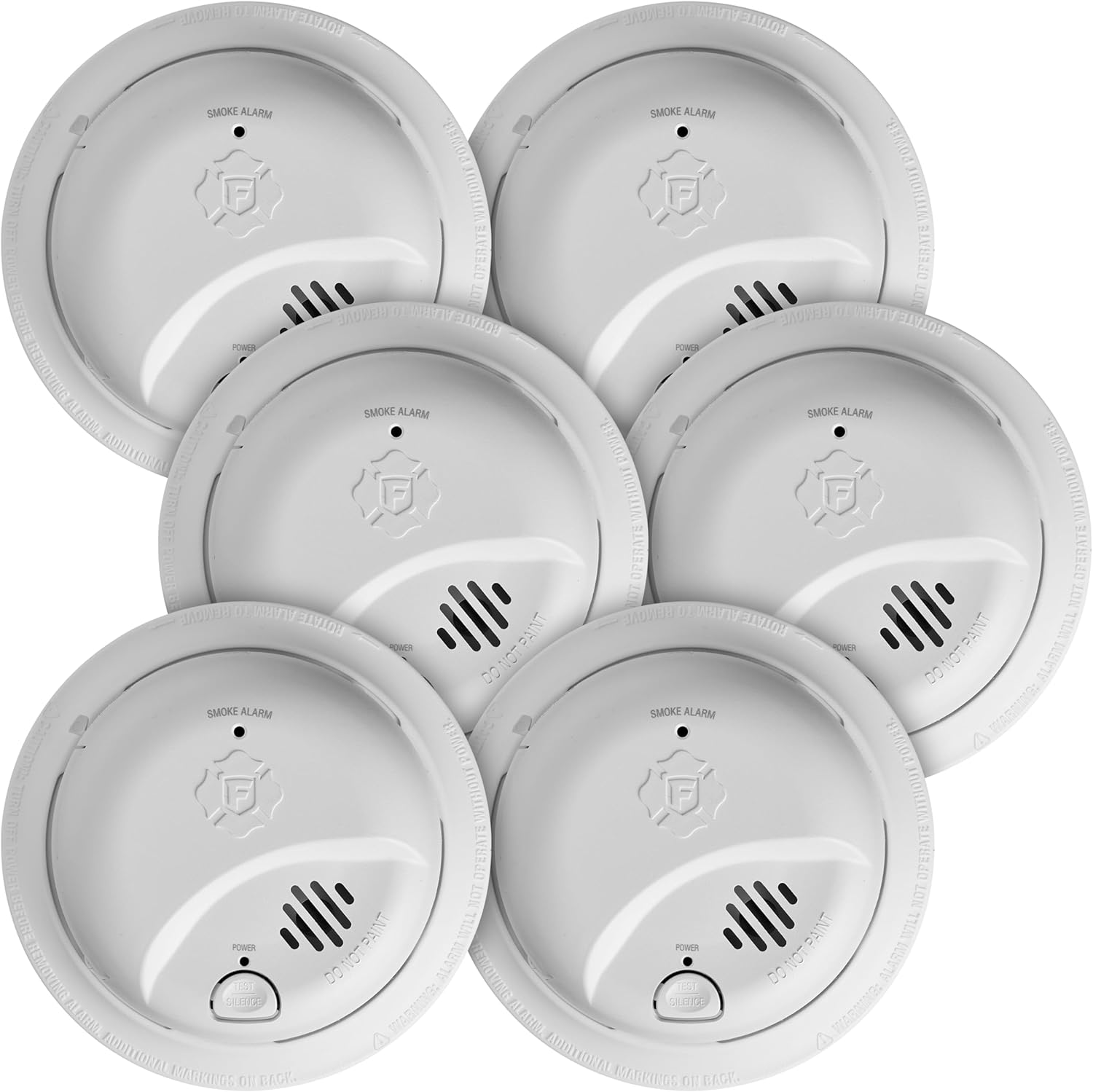
The First Alert SMI100-AC is a hardwired smoke alarm designed as a straightforward upgrade or replacement for existing hardwired units in residential settings. It is built for homeowners who want dependable, code-compliant fire protection without the complexity of a smart-home system. With its Quick Connect Plug and standard mounting footprint, it fits neatly into the space left by most older alarms.
The standout feature is First Alert's Precision Detection technology, which is engineered to distinguish between harmless cooking smoke and genuine fire conditions. Reviewers consistently praise this capability, noting that their old detectors would trigger constantly near the kitchen while the SMI100-AC remains quiet during normal cooking. The 85-decibel siren and interconnect system ensure that when a real threat is detected, every linked alarm in the home activates simultaneously, giving all occupants the earliest possible warning.
Build quality is solid throughout. The unit feels substantial rather than cheap, and the test and silence button is conveniently positioned for easy access. The visual alarm indicator is a thoughtful addition, letting you quickly identify which specific unit triggered the alert rather than having to check each one. The 9V battery backup is another practical strength, ensuring protection continues seamlessly during a power outage.
There are a couple of minor drawbacks worth noting. The always-on green status LED, while useful for confirming the unit is powered, has been flagged by some users as too bright for bedroom use, particularly at night. Additionally, those replacing older Firex or certain Kidde models may need to purchase a separate adapter harness, which adds a small but manageable extra step to the installation process.
Overall, the First Alert SMI100-AC earns its place as one of the top-rated smoke alarms in its category. It delivers on its core promises: easy installation, reduced false alarms, reliable interconnect performance, and robust backup power. For anyone upgrading an aging hardwired system, this is a well-rounded, trustworthy choice that delivers genuine peace of mind.
Model: SMI100-AC | Brand: First Alert | Power Source: Corded Electric (Hardwire) with 9V Battery Backup
Alarm Type: Audible (85 dB) | Detection Style: Precision Detection | Color: White | Item Weight: 16 ounces
Interconnect: Yes, compatible with First Alert and select other brands | Included Accessories: Quick Connect Plug, Mounting Bracket | ASIN: B0DR38F32P
Dimensions: 21.63 in. D x 3.81 in. W x 15 in. H | Certifications: Meets current industry standards for nuisance alarm reduction
If you are replacing an older hardwired smoke alarm, the SMI100-AC is one of the simplest options available. The included Quick Connect Plug eliminates the need to splice wires, and the base plate is designed to align with standard existing screw placements, making the swap a manageable DIY project for most homeowners.
Before purchasing, check whether your existing alarm uses a proprietary wiring harness, such as those found on older Firex models. In those cases, you may need a compatible adapter harness, which is available separately on major retail platforms. Buying a multi-pack can also reduce per-unit cost if you are upgrading multiple alarms throughout your home.
Consider placement carefully. While the Precision Detection technology reduces cooking-related false alarms, it is still best practice to install smoke alarms at least 10 feet from cooking appliances where possible. For bedroom installations, be aware of the always-on green indicator light, which some users find too bright in a dark room. A small piece of light-diffusing tape can mitigate this if needed.
This alarm is best suited for homeowners who want a reliable, no-frills hardwired detector with modern sensing technology. If you require Wi-Fi connectivity or smartphone integration, you may want to explore First Alert's smart alarm lineup instead. But for straightforward, dependable fire protection, the SMI100-AC is a top-tier choice.

Pros
- 10-year sealed battery means zero maintenance and no mid-night low-battery chirps for an entire decade
- Combines smoke and CO detection in one unit, reducing clutter and installation costs
- Clear LCD display provides real-time readings that most competing detectors in this price range do not offer
- Highly rated by verified buyers for ease of installation and reliable long-term performance
- UL-certified dual sensors minimize false alarms while maintaining fast detection sensitivity
Cons
- Standalone model only, with no wireless interconnect or Wi-Fi support, so it cannot alert other units in your home or send smartphone notifications
- The instruction manual has been noted by some users as unclear, particularly regarding how to read and interpret the LCD display
- Not hardwired, so it is not suitable for new construction or renovations where AC-powered detectors are required by code
The X-Sense SC01 is a 2-in-1 smoke and carbon monoxide detector designed for homeowners who want dependable, low-maintenance safety coverage without the complexity of hardwiring or smart home integration. It is especially well-suited for apartments, rental properties, bedrooms, and hallways where fire codes increasingly require dual-detection devices. At its price point, it competes directly with entry-level combo alarms while offering a feature set that punches above its class.
The headline feature is the 10-year sealed lithium battery, which powers the device for its entire service life and eliminates the need for battery changes. Combined with UL 217 and UL 2034 certification, the SC01 uses both photoelectric smoke sensing and electrochemical CO detection, a pairing that delivers faster response times and fewer nuisance alarms compared to single-sensor designs. The 85 dB alarm is loud enough to wake sleeping occupants, and reviewers consistently confirm its effectiveness in real-world conditions.
The real-time LCD display is a standout addition that sets the SC01 apart from similarly priced competitors. It shows live carbon monoxide concentration levels and current battery status, giving users actionable information rather than just an alarm state. The device itself is compact at 5.7 inches in diameter and is constructed from heat-resistant polycarbonate material, giving it a clean, modern look that blends into any room decor.
There are a few limitations worth noting. The SC01 is a standalone unit and does not support wireless interconnection with other alarms, nor does it offer Wi-Fi or app connectivity. Users who want whole-home alert coverage should consider the SC01-W or SC06-W models instead. Additionally, a small number of buyers found the instruction manual difficult to follow, particularly for understanding the LCD readout, which could be improved with clearer documentation.
Overall, the X-Sense SC01 is an excellent choice for anyone seeking a reliable, certified, and genuinely maintenance-free combo detector. The 10-year battery, dual-sensor technology, and real-time display make it a strong value for single-room or multi-unit installations. Backed by a 5-year warranty and lifetime technical support, it is a smart, practical investment in household safety.
Model: X-Sense SC01 | ASIN: B0B48XDLTT | Color: White | Dimensions: 5.7" D x 5.7" W x 2.0" H
Power Source: 10-Year Sealed Lithium Battery (not hardwired) | Battery Life: 10 years | Sensor Types: Photoelectric (smoke) and Electrochemical (CO) | Alarm Level: 85 dB
Safety Certifications: UL 217 Ed.9 (smoke) and UL 2034 Ed.5 (carbon monoxide) | Operating Humidity: Up to 90% | Enclosure Material: Heat-Resistant Polycarbonate
Display: Real-time LCD showing CO levels and battery status | Connectivity: Standalone only, no Wi-Fi or RF interconnect | In the Box: 1x SC01 Alarm, 1x User Manual, 3x Screws and Anchor Plugs
Warranty: 60-day money-back guarantee, 5-year quality warranty, lifetime technical support | Manufacturer: X-Sense Electronics Co., Ltd.
When choosing a combination smoke and CO detector, the two most important factors are sensor technology and power source. The SC01 uses photoelectric smoke detection, which is better at sensing slow, smoldering fires, paired with electrochemical CO sensing for accurate gas detection. This dual-sensor approach is recommended by fire safety experts and is now required by updated UL 217 standards.
Battery-powered detectors like the SC01 are ideal for renters, retrofit installations, and rooms where running electrical wiring is impractical. The 10-year sealed battery eliminates the most common reason detectors fail, which is dead or missing batteries. If you are equipping a new build or prefer AC power with battery backup, you will need a hardwired model instead.
If you need alarms that communicate with each other across multiple rooms or floors, the SC01 is not the right fit. X-Sense offers the SC01-W and SC06-W models with RF interconnection, meaning when one alarm sounds, all linked alarms sound simultaneously. For smart home users who want app alerts and remote monitoring, the XR0A-iR Wi-Fi model is worth considering.
For most single-family homes, apartments, and rental units where you want straightforward, certified, and maintenance-free protection in individual rooms, the SC01 delivers excellent value. It meets current fire code requirements for combination detectors in bedrooms and hallways, making it a practical and compliant choice for both homeowners and landlords.

Pros
- Precision Detection technology significantly reduces false alarms from cooking steam and smoke
- Simple battery-only operation eliminates the need for an electrician or hardwiring
- Covers two critical home safety threats in one affordable, space-saving device
- Photoelectric sensor offers reliable early warning for smoldering fire scenarios
- End-of-life notification removes the guesswork about when to replace the unit
Cons
- Battery-only power means ongoing battery replacement costs and the risk of missed low-battery alerts
- Single-unit purchase may require buying multiple alarms for full home coverage, adding to overall cost
- No interconnect capability noted, so alarms in different rooms will not trigger each other simultaneously
The First Alert SMCO100 is a battery-operated combination smoke and carbon monoxide detector designed for homeowners who want reliable dual protection without the complexity of hardwired installation. It suits renters, first-time homeowners, and anyone looking to quickly upgrade their home safety setup with minimal effort.
The standout feature is First Alert's Precision Detection technology, which uses a photoelectric sensor to identify slow, smoldering fires early while filtering out the kind of steam and cooking smoke that typically triggers nuisance alarms. In real-world use, this means fewer disruptive false alarms and greater confidence that a triggered alert signals a genuine threat. The carbon monoxide detection adds a critical second layer of protection against this odorless, invisible gas.
At 5.6 inches in diameter and under two inches thick, the SMCO100 has a slim, unobtrusive profile in classic white that blends into most home interiors. Installation is straightforward since no wiring is involved, and the included test and silence button makes routine checks and alarm management simple for any household member.
The primary drawback is its reliance on batteries, which requires periodic replacement and vigilance to ensure the unit stays powered. The alarm also does not appear to support interconnection with other units, meaning an alarm triggered in one room will not automatically alert other detectors throughout the home. For larger homes, this could be a meaningful limitation.
Overall, the First Alert SMCO100 earns its strong reputation as a dependable, easy-to-use combination alarm. Its Precision Detection technology, dual-threat coverage, and tool-free installation make it a practical and trustworthy choice for most households. If you want straightforward, effective home safety protection without the hassle of wiring, this alarm delivers solid value.
Brand: First Alert | Model: SMCO100 | Style: Precision Detection
Power Source: Battery Powered | Sensor Type: Photoelectric | Alarm Types: Smoke and Carbon Monoxide
Color: White | Dimensions: 5.6 inches D x 5.6 inches W x 1.9 inches H | Weight: 8.32 ounces
Unit Count: 1 | GTIN: 00029054022066
When choosing a combination smoke and carbon monoxide alarm, the most important factors are sensor type, power source, and whether the unit supports interconnection with other alarms in your home. The SMCO100 uses a photoelectric sensor, which is generally better at detecting slow, smoldering fires, making it a strong choice for bedrooms and living areas.
Battery-powered alarms like the SMCO100 are ideal for locations without nearby electrical outlets or for renters who cannot modify wiring. However, if you want a unit that never loses power during an outage, consider a hardwired model with battery backup. For full home coverage, plan to place one alarm on every level of your home and inside each sleeping area as recommended by the NFPA.
If interconnectivity is a priority, meaning you want all alarms to sound simultaneously when one detects a threat, look for models that support wired or wireless interconnect features. The SMCO100 is best suited for targeted single-room or supplemental protection rather than as part of a whole-home interconnected safety network.
Pros
- Exceptionally easy to install with no wiring required and all hardware included in the box
- Faster smoke detection compared to previous-generation models provides a meaningful safety advantage
- Reduced false alarm technology keeps the detector responsive to real threats without triggering on cooking or steam
- Compatible with existing Kidde mounting brackets, making upgrades from older models quick and hassle-free
- 10-year limited warranty offers strong long-term value and manufacturer confidence
Cons
- Batteries require replacement every six months, which adds a recurring maintenance cost compared to sealed 10-year battery models
- Smoke detection only with no carbon monoxide sensing, so a separate CO detector is needed for comprehensive home safety coverage
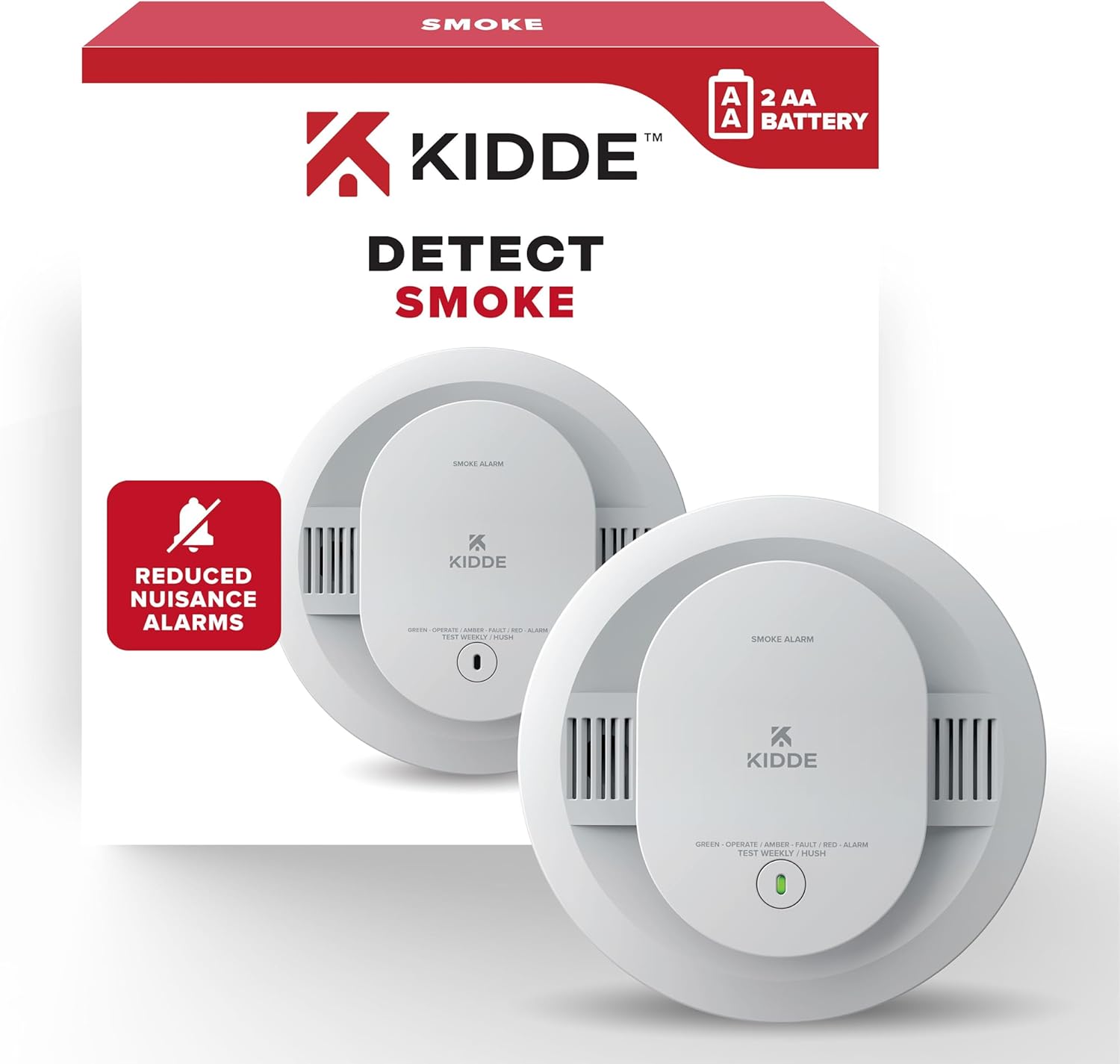
The Kidde 20SDR is a battery-powered photoelectric smoke detector designed for homeowners, renters, apartment dwellers, and property managers who need a reliable, no-fuss safety solution. Priced accessibly and backed by one of the most recognized names in home fire safety, this alarm is built to meet the latest UL 217 10th Edition and FCC standards, making it a code-compliant choice for a wide range of residential applications.
The standout feature of the 20SDR is its claim of detecting smoke 25% faster than leading competitor models tested under 9th Edition standards, a meaningful advantage when every second counts in a real fire scenario. The 85-decibel alarm is genuinely loud, and the accompanying red LED flash provides a clear visual cue that complements the audible alert. Reviewers consistently praise how quickly and accurately the unit responds during testing, with one customer confirming it triggered reliably even from smoke produced by a single match.
Installation is refreshingly straightforward. The unit ships with two AA batteries already included, mounting hardware, and a user guide, so you can have it up and running in minutes without any electrical knowledge. Several customers noted that the 20SDR fits directly onto existing Kidde mounting brackets, making it an ideal drop-in replacement for aging units. The compact 5-inch circular profile and clean white finish blend neatly into any ceiling or wall surface.
On the downside, the 20SDR requires battery replacement every six months, which is a recurring commitment compared to sealed 10-year battery alternatives like the Kidde 20SD10. Additionally, this model detects smoke only, so households wanting combined smoke and carbon monoxide protection will need to invest in a separate CO alarm or step up to the Kidde 30CUDR combo unit.
Overall, the Kidde 20SDR is a well-built, high-performing smoke detector that delivers on its core promise of fast, accurate, and reliable smoke detection. It earns strong marks from verified buyers for ease of installation, build quality, and peace of mind. For anyone seeking a dependable, affordable, and code-compliant smoke alarm without the complexity of hardwiring, the 20SDR is a smart and trustworthy choice.
Model: Kidde 20SDR | ASIN: B0CX6RMV4B | Sensor Type: Photoelectric | Power Source: 2x AA Alkaline Batteries (included)
Alarm Output: 85 dB | LED Indicator: Red LED blinks when smoke is detected | Dimensions: 1.88 inches deep x 5 inches wide x 5 inches tall | Weight: 9.12 ounces | Color: White | Enclosure Material: Plastic
Operating Humidity: Up to 95% relative humidity, non-condensing | Upper Temperature Rating: 100 degrees Fahrenheit | Battery Replacement Frequency: Every 6 months | Interconnect: None | Voice Alerts: No
Safety Standards: UL 217 10th Edition, FCC certified, ETL Listed | Warranty: 10-Year Limited Warranty from date of purchase | In the Box: Smoke alarm unit, 2 AA batteries, mounting hardware, user guide
If you are shopping for a smoke detector, the most important decision is choosing between a battery-powered and a hardwired model. The Kidde 20SDR is ideal for renters, apartment residents, or homeowners who want a quick install without calling an electrician. If your home already has hardwired smoke detectors, you may want to look at hardwired Kidde models instead to maintain interconnectivity between units.
Consider whether you need smoke detection only or combined smoke and carbon monoxide protection. The 20SDR covers smoke hazards exclusively, which is sufficient for most rooms, but bedrooms and areas near attached garages benefit significantly from CO detection as well. In that case, the Kidde 30CUDR combo alarm is a worthwhile upgrade to consider alongside this unit.
For those who prefer never worrying about battery changes, the Kidde 20SD10 offers a sealed 10-year battery that eliminates the six-month replacement cycle. However, if you are comfortable with a simple battery swap twice a year, the 20SDR delivers comparable detection performance at a lower upfront cost, making it an excellent value for multi-room installations or rental properties.
Placement matters as much as the detector itself. Install smoke alarms on every level of your home, inside each bedroom, and outside sleeping areas. Avoid placing them near kitchens or bathrooms where steam and cooking fumes can trigger nuisance alarms, though the 20SDR's advanced sensing technology does help reduce these false alerts significantly compared to older models.

Pros
- Sealed 10-year battery eliminates ongoing maintenance and the frustration of middle-of-the-night low-battery alerts
- Photoelectric sensor effectively reduces nuisance alarms from everyday cooking and steam, confirmed by real user experiences
- Quick, tool-friendly installation with included mounting hardware that fits existing ceiling brackets
- Loud 85 dB alarm with red LED indicator provides both audible and visual emergency warnings
- UL 217 10th Edition certification ensures compliance with current building and safety codes
Cons
- The non-removable battery means you cannot silence a faulty or malfunctioning alarm by pulling the battery, which can be extremely frustrating at 2am if the unit triggers unexpectedly
- Standalone design with no interconnect capability means it cannot be linked to other alarms in a multi-room safety network
- No voice alerts or smart home integration, limiting its appeal for tech-forward households or those with hearing impairments
The Kidde 20SD10 is a battery-powered photoelectric smoke detector designed for homeowners, renters, and property managers who want reliable fire protection without the ongoing hassle of battery maintenance. Its defining feature is a sealed 10-year lithium battery that powers the unit for its entire lifespan, making it a true install-and-forget safety device suited to bedrooms, hallways, and apartments.
Performance-wise, the 20SD10 stands out with detection speeds claimed to be over 25% faster than standard models, based on Kidde's internal smoldering-fire tests. The advanced photoelectric sensor does a commendable job of distinguishing real smoke from everyday cooking vapors and steam, a point echoed by multiple verified buyers who noted fewer nuisance trips compared to older detectors, even in kitchen-adjacent locations.
The unit is compact at 5 inches wide and under 10 ounces, fitting neatly on any ceiling without looking obtrusive. Installation is straightforward, taking most users just a few minutes using the included mounting hardware. The 85 dB alarm is genuinely loud, and the red LED flash adds a useful visual cue during an alert. Build quality is solid plastic construction typical of the category, and the clean white finish blends into most home decors.
The most significant drawback is the sealed battery design itself. While it eliminates low-battery chirps, it also means you cannot remove the battery to silence a malfunctioning alarm. At least one reviewer experienced a unit that triggered repeatedly at 2am with no way to stop it short of removing the detector entirely from the ceiling. Additionally, the 20SD10 is standalone only, with no interconnect capability and no smart home or voice alert features.
Overall, the Kidde 20SD10 earns its place as a top-ranked smoke detector for most households. It delivers on its core promise of low-maintenance, code-compliant fire detection at a reasonable price point. For those who simply want a reliable detector they can install and trust for a decade, this is an excellent choice. Those needing interconnected alarms or smart integration should look at Kidde's broader lineup instead.
Model: Kidde 20SD10 | ASIN: B0CX6PRPGY | Sensor Type: Photoelectric | Power Source: Sealed 10-Year Lithium Battery
Alarm Output: 85 dB | LED Indicator: Red (flashes on alarm) | Dimensions: 2 inches deep x 5 inches wide x 5 inches tall | Weight: 9.6 ounces | Color: White | Enclosure: Plastic
Certifications: UL 217 10th Edition, FCC, ETL Listed | Interconnect: None (Standalone) | Voice Alerts: No | Smart Compatible: No | Operating Humidity: Up to 95% RH non-condensing | Max Temperature: 100 degrees Fahrenheit
Warranty: 10-Year Limited from date of purchase | Includes: Alarm unit, mounting hardware, user guide | Battery Replacement Frequency: Never (sealed for life of unit)
When choosing a smoke detector, the two most important decisions are sensor type and power source. The Kidde 20SD10 uses a photoelectric sensor, which is better at detecting slow, smoldering fires such as those caused by overheated wiring or upholstered furniture. If your primary concern is fast-flaming fires, an ionization sensor may respond more quickly, though photoelectric models are widely recommended for residential use due to fewer false alarms.
The sealed 10-year battery is a major convenience feature, but it comes with a trade-off. Unlike detectors with removable 9-volt or AA batteries, you cannot cut power to silence a malfunctioning unit. If this concerns you, consider the Kidde 20SDR model, which uses replaceable AA batteries and still meets UL 217 10th Edition standards, at a slightly lower price point.
For larger homes or multi-story properties, consider whether you need interconnected alarms. When one interconnected alarm sounds, all units in the network alert simultaneously, which is critical for sleeping occupants on different floors. The 20SD10 does not support interconnection. For that capability, look at Kidde's smart lineup such as the RGSDR-RW, which offers wire-free interconnect and app integration.
Placement matters as much as the detector itself. Install smoke alarms on every level of your home, inside each bedroom, and outside sleeping areas. Avoid placing them directly in kitchens or bathrooms where steam and cooking vapors are frequent. The 20SD10's reduced false-alarm technology gives it more flexibility near kitchen-adjacent hallways, but a direct kitchen placement is still not recommended by safety authorities.
Smoke Detector Buying Guide
Not every smoke detector is built for the same situation. The right choice depends on your home’s wiring, the rooms you need to cover, and whether you want added protection against carbon monoxide. Here are the four most important factors to evaluate before you buy.
Power Source: Hardwired vs. Battery-Operated
Hardwired detectors like the First Alert BRK SMI100-AC Hardwired Smoke Detector connect directly to your home’s electrical system and include a battery backup for power outages. They are ideal for new construction or homes already wired for interconnected alarms.
Battery-operated models such as the First Alert Battery Smoke Alarm | SMI100 require no wiring at all, making them a practical solution for renters or anyone who wants a quick, hassle-free install. Sealed 10-year battery options eliminate the need for annual battery swaps entirely.
Detection Technology and False Alarm Reduction
Modern detectors use photoelectric sensors, ionization sensors, or a combination of both. Photoelectric technology is generally better at detecting slow, smoldering fires and is less likely to trigger false alarms from cooking steam or toast. Several models in this roundup, including those from FirstAlert and Kidde, use advanced sensing algorithms specifically designed to reduce nuisance alarms.
The First Alert Hardwire Smoke Alarm | SMI100-AC features Precision Detection technology that distinguishes cooking vapors from genuine fire smoke, keeping your household from alarm fatigue while still responding rapidly when it counts.
Combination Smoke and Carbon Monoxide Protection
Carbon monoxide is an odorless, invisible gas that poses a serious risk in homes with gas appliances, fireplaces, or attached garages. A combination detector addresses both hazards with a single device, simplifying installation and coverage.
The X-Sense Smoke Detector and Carbon Monoxide detector uses both photoelectric and electrochemical sensors for dual-threat protection, while the First Alert Battery Combination Smoke & Carbon alarm delivers the same 2-in-1 coverage in a battery-operated format. The X-Sense model carries UL 217 and UL 2034 certification, and both are built to meet current combination smoke and carbon monoxide alarm standards. You can explore more safety essentials in the Tools & Home Improvement section of our site.
Interconnectivity and Coverage Area
In a multi-story home, interconnected alarms are a critical safety feature. When one detector senses smoke, all linked units sound simultaneously, giving everyone in the building maximum warning time. The First Alert BRK SMI100-AC 6-Pack supports interconnection of up to 18 units, making it a strong choice for larger homes.
Compact standalone models like the Kidde Compact Smoke Detector, AA Battery-Powered are well-suited for apartments, small spaces, or supplemental coverage in a single room. Always confirm the alarm’s coverage rating matches the square footage of the area you need to protect.
Final Thoughts
Every home deserves dependable smoke detection, and the models reviewed here cover the full spectrum of needs. If you want whole-home, interconnected protection with battery backup, the First Alert BRK SMI100-AC Hardwired Smoke Detector is a proven, professional-grade choice. For renters or anyone who wants zero-maintenance simplicity, the Kidde Smoke Detector, 10-Year Battery Powered delivers reliable performance with a sealed battery that lasts the life of the device, no chirps, no replacements, and no worries.
Frequently Asked Questions
How many smoke detectors do I need in my home?
Most fire safety authorities recommend installing a smoke detector on every level of your home, inside each bedroom, and outside every sleeping area. Larger open-plan spaces may require more than one unit per floor to ensure adequate coverage. Interconnected systems are especially valuable in multi-story homes because all alarms sound at once when any single unit detects smoke.
How often should I replace my smoke detector?
As of 2026, the general recommendation is to replace smoke detectors every 10 years from the manufacture date, not the purchase date. Sensors degrade over time and may not respond as reliably in an emergency. Many newer models include an end-of-life warning signal that alerts you when it is time to replace the unit. You can find additional guidance in our Home Safety & Security resources.
What is the difference between a photoelectric and an ionization smoke detector?
Ionization detectors are generally faster at sensing fast-flaming fires, while photoelectric detectors respond more quickly to slow, smoldering fires that produce a lot of smoke before igniting. Because most residential fires begin as smoldering events, photoelectric or dual-sensor detectors are widely recommended for bedrooms and living areas. Combination models offer the broadest protection by incorporating both technologies.
Do I need a combination smoke and carbon monoxide detector?
If your home uses gas appliances, a wood-burning fireplace, or has an attached garage, a combination detector is strongly advisable. Carbon monoxide poisoning is a leading cause of accidental death in the home, and the gas is completely undetectable without a sensor. A 2-in-1 unit like the X-Sense SC01 or the First Alert SMCO100 provides comprehensive protection without requiring separate devices for each hazard.