
You finish a hard workout, and the next morning your legs feel like concrete. Whether you are a dedicated athlete or someone who spends long hours at a desk, muscle tightness is a universal problem. A quality foam roller can be the difference between bouncing back quickly and spending days hobbling around.
This guide covers eight of the most highly rated foam rollers available right now, from budget-friendly basics to professional-grade deep tissue tools. If you are exploring the broader world of yoga and recovery gear, you will find these rollers fit seamlessly into any routine. Read on to find the right match for your body and your goals.

Pros
- Exceptional durability, with users reporting the roller holding its shape for 10 or more years of regular use
- Textured multi-density surface provides noticeably more effective muscle targeting than smooth foam rollers
- Highly portable and compact without sacrificing the ability to cover all major muscle groups
- Suitable for all skill levels, from beginners to professional athletes
- Easy to clean and maintain after sweaty workout sessions
Cons
- Some users find the firmness level insufficient for very deep tissue work and may prefer a harder roller
- The 13-inch length, while portable, may feel limiting for users who want to roll larger areas in fewer passes
The TriggerPoint Grid 1.0 Foam Roller is a 13-inch self-massage tool designed for athletes, fitness enthusiasts, and everyday users seeking effective muscle recovery. Built around a patented multi-density GRID surface, it targets tight muscles, knots, and trigger points with a level of precision that standard smooth foam rollers simply cannot match. Whether you are recovering from an intense workout or managing chronic back pain, this roller positions itself as a daily-use recovery essential.
The standout feature is the Distrodensity Zone construction, which uses varying ridges, flat sections, and nodules across the surface to replicate the feel of a therapist using different parts of their hand. In real-world use, this translates to noticeably deeper muscle engagement compared to basic rollers. Reviewers consistently highlight how effectively it targets the back, quads, IT band, and shoulders, with several long-term users noting they returned to it after trying alternatives and found nothing comparable.
Build quality is a genuine strength of this product. The EVA-foam-wrapped hollow core is engineered to withstand repeated, heavy use without compressing or losing its shape. Multiple reviewers report owning their Grid roller for a decade or more with no structural degradation, which is a remarkable claim for a foam product in this price range. The low-maintenance surface also resists sweat and dirt, wiping clean in seconds after use.
The primary drawback worth noting is firmness. A subset of users, particularly those accustomed to very firm or vibrating rollers, feel the Grid 1.0 does not deliver enough pressure for the deepest tissue work. The 13-inch length is a deliberate portability trade-off, and while it covers all key muscle groups effectively, users who prefer rolling the full length of their spine in one pass may find it slightly short.
Overall, the TriggerPoint Grid 1.0 is one of the best-value foam rollers available, combining smart engineering, proven durability, and real recovery benefits into a compact and portable package. It earns its reputation as a top-ranked product in its category and is a confident recommendation for anyone serious about muscle health and mobility.
Dimensions: 13 inches long x 5.5 inches in diameter, weighing approximately 1.4 lbs. The compact footprint makes it easy to store at home or pack into a gym bag or luggage without hassle.
Weight Capacity: Engineered to support up to 500 lbs of body weight, making it suitable for a wide range of users regardless of size or fitness level. The hollow EVA-foam core maintains structural integrity under repeated full-body pressure.
Materials and Construction: Built from EVA foam with a proprietary hollow core design. The outer surface features the patented GRID pattern with Distrodensity Zones of varying widths and densities. The surface is non-porous and easy to wipe clean.
Warranty: Includes a limited one-year manufacturer's warranty against defects in materials and workmanship, provided by Implus Footcare, LLC. The roller has been available since 2009 and carries a strong track record of real-world longevity well beyond the warranty period.
Who should buy this roller? The TriggerPoint Grid 1.0 is an excellent choice for runners, cyclists, gym-goers, yoga practitioners, and office workers dealing with back or hip tightness. It is equally well-suited for beginners exploring self-myofascial release and experienced athletes who already incorporate foam rolling into their training regimen.
What to consider before buying: If you are new to foam rolling, the Grid 1.0 is a great starting point because its textured surface is effective without being punishingly hard. However, if you already use a firm or extra-firm roller and need maximum pressure, consider the TriggerPoint Grid 2.0 or a higher-density alternative. The 13-inch size is ideal for portability, but if you primarily roll at home and want to cover your full back in one pass, a 26-inch or 36-inch roller may better suit your needs.
How to get the most out of it: Use the Grid 1.0 immediately after workouts when muscles are warm, or as part of a morning mobility routine. Roll slowly over each muscle group, pausing on tender spots for 20 to 30 seconds to allow the tissue to release. The different surface zones can be used strategically, with flatter sections for broader muscle groups and the nodule zones for more targeted trigger point work. Pair with stretching for best results.

Pros
- Durable EVA foam construction outlasts cheaper store-brand rollers and resists compression over time
- Soft density is comfortable enough for beginners and sensitive users while still delivering effective muscle relief
- 36-inch length accommodates full spinal alignment and broad muscle group rolling without repositioning
- Highly versatile, suitable for home use, clinical rehab, gym training, and travel
- Trusted by physical therapists and fitness professionals, reflected in its top-ranked position among foam rollers
Cons
- The soft density may not provide enough pressure for experienced users or athletes seeking deep-tissue massage intensity
- The 36-inch size, while versatile, can be bulky to store in smaller home spaces or compact gym bags
The OPTP PRO-Roller Soft Density Foam Roller is a 36-inch by 6-inch round roller crafted from closed-cell EVA foam, designed to serve athletes, rehabilitation patients, yoga practitioners, and fitness enthusiasts alike. It occupies a clear niche as a professional-quality tool that bridges the gap between clinical-grade equipment and accessible home fitness gear.
One of its most notable strengths is the soft density foam, which delivers a gentle, comfortable rolling experience that is ideal for beginners, post-injury recovery, and anyone with sensitive muscles or connective tissue. Unlike firmer rollers that can feel punishing, the PRO-Roller encourages longer, more consistent use without discomfort, making it easier to build a regular recovery habit.
Build quality is a genuine standout here. The closed-cell EVA foam resists moisture absorption, maintains its cylindrical shape under repeated load, and cleans up effortlessly with a damp cloth. This durability is what separates the OPTP PRO-Roller from budget alternatives that flatten or crack within months of regular use.
The main drawback is that the soft density may leave experienced rollers or deep-tissue seekers wanting more pressure. Users accustomed to firm or extra-firm rollers may find this model too gentle for targeted trigger point work. The premium price point is also worth noting, though the longevity and quality largely justify the investment for serious users.
Overall, the OPTP PRO-Roller Soft Density Foam Roller is a top-tier choice for anyone prioritizing comfort, durability, and versatility. It earns its place as one of the top-ranked foam rollers on the market and is especially recommended for physical therapy patients, yoga and Pilates practitioners, and fitness beginners looking for a reliable, long-lasting recovery tool.
The OPTP PRO-Roller is an excellent fit for physical therapy and rehabilitation patients who need a gentle, supportive foam roller that encourages recovery without aggravating sensitive areas. Its soft density makes it safe and comfortable for use immediately following injury or surgery, under professional guidance.
Yoga and Pilates practitioners will appreciate how the 36-inch length supports full spinal alignment during core exercises and stretching routines. The roller doubles as a balance and stability prop, adding functional value beyond simple muscle rolling.
Fitness beginners and casual gym-goers who are new to foam rolling will find the soft density far less intimidating than firm rollers. It lowers the barrier to entry for self-myofascial release and helps users build a consistent recovery routine without dreading the process.
Experienced athletes or those who prefer aggressive deep-tissue massage may want to consider OPTP's firmer roller options instead. However, for anyone who values comfort, longevity, and professional quality in a single package, the PRO-Roller Soft is a highly compelling choice.
Dimensions: 36 inches x 6 inches x 6 inches. Weight: 15 ounces. Shape: Round. Color: Blue. Model Number: PSFRB.
Foam Type: Closed-cell EVA foam. Density: Soft. Surface: Textured grip for improved traction. Cleaning: Wipe with damp cloth and mild detergent.
Best Sellers Rank: Top 15 in Foam Rollers on Amazon. First Available: September 2010, reflecting over a decade of proven performance in the market. Manufacturer: OPTP, a trusted brand in physical therapy and fitness equipment.

Pros
- Exceptionally durable construction resists compression and maintains firmness over time
- 26-inch length is ideal for full-body rolling, especially the upper and lower back
- Multi-density surface provides a noticeably more effective massage than standard flat rollers
- Supports up to 500 pounds, making it suitable for a wide range of body types
- Free online video library helps beginners learn proper form and maximize results
Cons
- Premium price point is significantly higher than basic foam rollers, which may deter budget-conscious buyers
- The firm density can feel intense or uncomfortable for beginners or those with low pain tolerance
- At 26 inches, it is less portable than the smaller GRID original or Mini versions
The TriggerPoint GRID 2.0 is a 26-inch professional-grade foam roller designed for deep tissue massage, muscle recovery, and mobility improvement. It is built for athletes, fitness enthusiasts, and anyone dealing with chronic muscle tightness who wants a more effective alternative to a basic foam roller. Whether you are warming up before a workout or recovering afterward, this roller is engineered to deliver consistent, targeted relief.
What sets the GRID 2.0 apart is its patented multi-density exterior, which features three distinct surface zones that replicate the feel of a massage therapist's hands. The wide flat sections mimic the palm, the tubular ridges simulate fingers, and the smaller firm nodes act like fingertips pressing into knots. Reviewers consistently note that they can feel it working on tight spots in the upper back, lower back, and between the shoulder blades in a way that standard rollers simply cannot match.
Build quality is a clear strength of this product. The rigid hollow core is wrapped in durable EVA foam that resists flattening and deformation even under heavy, repeated use. Multiple users report that unlike cheaper foam rollers that go soft within months, the GRID 2.0 holds its shape and firmness over time. The 500-pound weight capacity further speaks to the structural integrity of the design.
There are a couple of considerations worth noting. The firm density is a deliberate design choice, but it can be a shock for first-time foam roller users or those with sensitive muscles. Starting slowly and using the included instructional videos is strongly recommended. The higher price is also a real barrier compared to budget options, though most users feel the durability and performance justify the investment over time.
Overall, the TriggerPoint GRID 2.0 is one of the most capable and well-built foam rollers available. It earns its strong reputation among professionals and everyday athletes through superior design, lasting durability, and genuinely effective muscle relief. If you are ready to upgrade from a basic roller and commit to consistent recovery, this is a top-tier choice that delivers real results.
The TriggerPoint GRID 2.0 measures 25.98 x 5.51 x 5.51 inches and weighs just 1 pound, making it lightweight despite its full 26-inch length. Its compact diameter allows users to also thread an arm through the hollow core for portability or storage convenience.
The roller is constructed from multi-density EVA foam layered over a rigid hollow core, which is the key to its durability and shape retention. It supports a maximum user weight of 500 pounds and is classified as a firm-density roller, placing it between the standard GRID and the extra-firm GRID X in the TriggerPoint lineup.
Model number: TPT-GRD2B. Compatible with all body types and suitable for unisex adult use. Includes a 1-year manufacturer warranty and free access to TriggerPoint's online instructional video library. First introduced in December 2011, it has maintained a top ranking in the Foam Rollers category on major retail platforms.
If you are deciding between the TriggerPoint GRID lineup, the GRID 2.0 is best suited for users who want full-body coverage in a single roller. The 26-inch length makes it especially effective for rolling the entire spine, hamstrings, and IT band without repositioning. If portability is a priority, the 13-inch original GRID or the travel-friendly GRID Mini may be better fits.
For those new to foam rolling, the firm density of the GRID 2.0 may feel intense at first. It is worth starting with shorter sessions of 30 to 60 seconds per muscle group and gradually increasing pressure as your body adapts. The free online video library is a genuinely useful resource for learning correct technique and avoiding common mistakes.
Consider the GRID X if you are an experienced roller with very tight or dense muscles who wants extra firmness. If budget is a concern, the original 13-inch GRID offers the same patented multi-density surface at a lower price point, though you sacrifice the extended length. For most users who want the best balance of size, performance, and durability, the GRID 2.0 represents the strongest overall value in the lineup.
Pros
- Delivers significantly deeper muscle penetration compared to traditional smooth foam rollers
- Versatile rolling and rocking motions allow users to customize massage intensity
- Highly rated by real users for relieving back pain, glute tightness, and post-workout soreness
- Compact midsize form factor is easy to store and travel with
- Built to last with premium foam that resists compression over extended use
Cons
- The firm bumps can feel intense or even painful for beginners or those with low pain tolerance, requiring a break-in period to get comfortable
- At a higher price point than basic foam rollers, it may not suit casual users who only roll occasionally
- The midsize length may feel limiting for taller users who prefer full-length coverage in a single pass
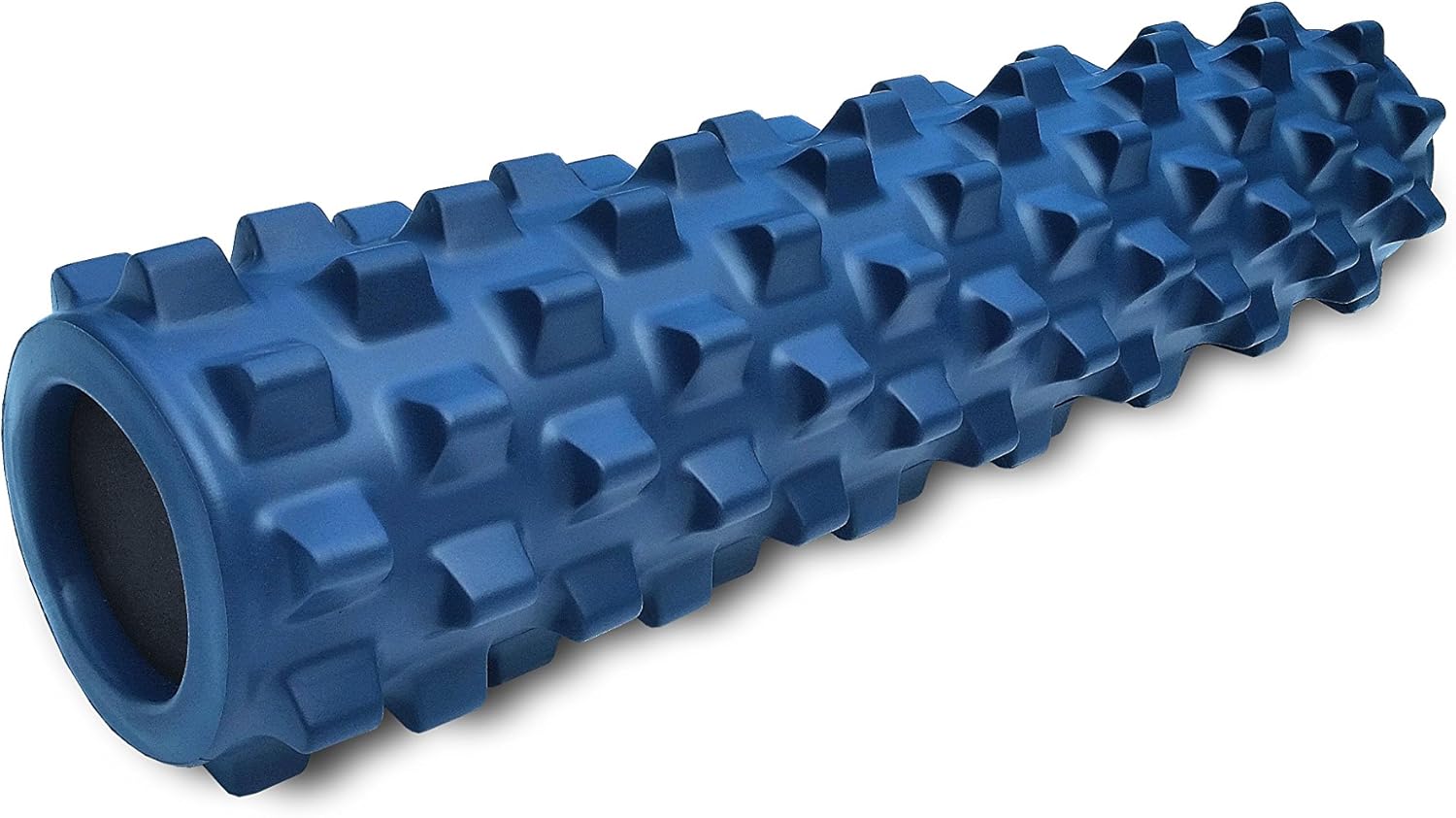
The RumbleRoller Original Foam Roller in the Midsize 22-inch format is designed for athletes, fitness enthusiasts, and anyone seeking serious muscle recovery. Unlike traditional smooth rollers, it features a grid of firm, flexible bumps that dig into soft tissue to break up knots, erode trigger points, and restore flexibility in a way that flat rollers simply cannot match.
What truly sets the RumbleRoller apart is its dual-motion capability. The standard rolling motion delivers a wiping-type pressure across muscle fibers, while switching to a side-to-side rocking motion increases resistance and drives the bumps even deeper into tight tissue. This makes it one of the most versatile self-myofascial release tools available, effectively replacing a significant portion of what a hands-on massage therapist would do.
Build quality is excellent. The foam maintains its structural integrity even after months of regular use, and the bumps retain their firmness without flattening out. The bumps are also engineered to deflect around bony prominences, which adds a layer of safety when rolling near the spine or other sensitive areas. Customer reviews consistently praise the quality of materials and the durability of the product over time.
The main drawback is the intensity. New users often describe their first few sessions as surprisingly uncomfortable, particularly if they are accustomed to softer rollers. The bumps are stiff when new and require a short break-in period before they become more pliable. Additionally, the price is noticeably higher than entry-level foam rollers, which may give budget-conscious buyers pause.
Overall, the RumbleRoller Original Midsize is a top-tier recovery tool that earns its reputation. It is best suited for serious athletes, CrossFit practitioners, and individuals managing chronic muscular pain who want results that go beyond what a standard roller can offer. If you are ready to invest in your recovery, this roller delivers exceptional value and long-lasting performance.
To get started with the RumbleRoller, begin by placing it on a flat surface and slowly lowering your target muscle group onto the bumps. Use your arms or opposite leg to control how much body weight you apply, especially in your first few sessions when the bumps are still firm and your muscles are adjusting to the pressure.
For general muscle rolling, move slowly across the muscle in one direction, pausing for a few seconds on any areas that feel particularly tight or tender. This pause-and-hold technique helps the bumps work into the knot more effectively than rapid rolling. Common target areas include the upper and lower back, glutes, hamstrings, calves, and IT band.
To intensify the massage, shift from a forward and backward rolling motion to a gentle side-to-side rocking motion while keeping the roller stationary on the target area. This engages the bumps differently and increases the depth of penetration into the tissue. Start with just a few minutes per muscle group and gradually increase duration as your tolerance builds over time.
Brand: RumbleRoller
Model: RRM226
Size: Midsize, 22 inches long x 5.5 inch diameter
Available Sizes: Compact (13 in), Midsize (22 in), Full Size (31 in)
Category: Deep Tissue Foam Roller
Recommended Use: CrossFit, Athletic Recovery, Myofascial Release, Physical Therapy
Best Sellers Rank: Top 40 in Foam Rollers on Amazon
Customer Rating: 4.7 out of 5 stars
Date First Available: January 2016
Manufacturer: RumbleRoller
ASIN: B0716Q348W

Pros
- Firm, high-density foam maintains its shape and does not flatten with regular use
- Lightweight and portable design makes it easy to transport and reposition mid-workout
- Versatile enough for balance training, stretching, strengthening, and recovery
- Easy to clean surface keeps hygiene simple after sweaty sessions
- Top-ranked in its category, reflecting strong market confidence
Cons
- The firm density may feel too intense for beginners or those with acute muscle soreness who would benefit from a softer roller
- At 18 inches, it may be slightly short for taller users who prefer full-length spine coverage in a single pass
- The single black color and basic design offer no texture variations for targeted trigger point relief
The Amazon Basics 18-Inch High-Density Foam Roller is a straightforward, reliable recovery tool aimed at fitness enthusiasts, gym-goers, yoga practitioners, and anyone looking to add self-myofascial release to their routine. It delivers firm, consistent support without the premium price tag of specialty brands, making it one of the most accessible entry points into foam rolling.
The standout quality of this roller is its high-density polypropylene construction. Unlike cheaper EVA foam rollers that soften and lose their shape over time, this roller stays firm session after session, ensuring you get consistent pressure on muscles and connective tissue. The 18-inch length covers major muscle groups including the back, hamstrings, calves, and IT band with ease.
In terms of design, the roller features molded edges that reduce discomfort during use, a thoughtful detail that sets it apart from blunt-edged alternatives. The smooth, uniform surface is easy to wipe down after workouts, and its compact, lightweight form factor means it slides easily into a gym bag or sits neatly in a home workout space without taking up much room.
The primary drawback is the firmness level, which may be too aggressive for complete beginners or individuals recovering from injury. Those new to foam rolling may find the pressure uncomfortable at first and might benefit from starting with a softer option before graduating to this density. Additionally, the smooth surface lacks texture channels or knobs for targeted trigger point work.
Overall, the Amazon Basics Foam Roller earns its top ranking in the category. It is a dependable, durable, and budget-conscious choice that delivers real value for everyday recovery and training support. For anyone seeking a simple, effective roller that holds up over time, this is a hard product to beat at its price point.
Dimensions: 18 x 6 x 6 inches (Length x Width x Height), offering a compact yet functional size suitable for most body areas and storage spaces.
Weight: 0.27 kg, making it one of the lightest options in its class without sacrificing structural integrity or firmness during use.
Material: High-density polypropylene, a firm and chemical-free material that resists compression and maintains its cylindrical shape under repeated body weight pressure.
Firmness: Firm. Designed for users who are comfortable with moderate to deep pressure during myofascial release and recovery exercises.
Target Use: Whole body, including back, legs, glutes, calves, and shoulders. Suitable for balance training, flexibility work, and post-exercise recovery routines.
When choosing a foam roller, firmness is the most important factor to consider. Soft rollers are gentler and better suited to beginners or those with sensitive muscles, while high-density rollers like this one provide deeper pressure ideal for experienced users and athletes seeking serious myofascial release.
Length also matters. An 18-inch roller is a great all-around size for targeted work on specific muscle groups and is easier to transport than a 36-inch full-length roller. However, if you primarily want to roll out your entire spine in one pass, a longer roller may be preferable.
Surface texture is another consideration. Smooth rollers deliver even pressure across broad muscle areas, while textured or grid-style rollers can simulate a deeper, more targeted massage. This Amazon Basics model features a smooth surface, making it better suited for general rolling rather than pinpoint trigger point therapy.
This roller is best suited for: gym members who want a reliable take-along recovery tool, yoga and Pilates practitioners using it for balance and core work, and intermediate to advanced users comfortable with firm pressure. If you are brand new to foam rolling, consider starting with a softer density and working your way up to this firmness level.

Pros
- Firm enough to provide effective deep tissue pressure for sore muscles and pre-workout warm-ups
- Holds its shape well even with frequent daily use, offering long-term durability
- Versatile 24-inch size works for full-back rolling and a wide range of stretching exercises
- Excellent value for the price, outperforming many pricier alternatives in basic performance
- No chemical odor out of the box, which is a common complaint with cheaper foam rollers
Cons
- Some users find it slightly softer than expected for a high-density label, which may not satisfy those dealing with deep, stubborn muscle knots
- No textured or ridged surface, so those wanting a more targeted massage effect may need to look at grooved roller options
The Amazon Basics 24-Inch High Density Foam Roller is a straightforward, well-built recovery tool designed for everyday athletes, gym-goers, and anyone dealing with post-workout muscle tightness. It targets key body areas including the back, legs, arms, and shoulders, making it a versatile addition to any fitness routine without the premium price tag.
In real-world use, this roller delivers firm, consistent pressure that effectively loosens tight muscles and improves circulation before or after workouts. Reviewers consistently praise its ability to warm up the legs before squats and relieve back tension after long days, noting that it performs reliably session after session without losing its structural integrity.
Built from high-density polypropylene, the roller resists compression and maintains its cylindrical shape even with daily use. The molded edges reduce discomfort at contact points, and the smooth surface wipes clean easily. At 24 inches long and 6 inches in diameter, it strikes a practical balance between coverage and portability, fitting comfortably in a gym bag or beside a yoga mat.
The one honest caveat worth noting is that a small number of users feel the roller lands on the softer end of the firmness spectrum. For those dealing with very deep or stubborn muscle knots, a denser or textured roller might be necessary as a complement. That said, for general daily rolling and recovery, the firmness level is appropriate for most users.
Overall, the Amazon Basics Foam Roller is a dependable, no-frills recovery tool that punches well above its price point. It is best suited for casual to intermediate fitness enthusiasts who want a durable, effective roller without paying for unnecessary extras like vibration motors or specialty textures. Highly recommended as a first roller or a reliable everyday option.
Brand: Amazon Basics
Model Number: EPPBK-24-1
ASIN: B071P2MQ5D
Color: Black
Dimensions: 24 x 6 x 6 inches (L x W x H)
Diameter: 6 inches
Item Weight: Lightweight for easy portability
Material: High-density polypropylene foam
Firmness: Firm
Target Body Parts: Arms, Back, Legs, Shoulders
Primary Benefit: Muscle therapy and recovery
Chemical Free: Yes
Best Sellers Rank: Top 5 in Foam Rollers category
Customer Rating: Highly rated with thousands of verified reviews
Care Instructions: Wipe clean with a damp cloth
If you are new to foam rolling, the Amazon Basics 24-Inch Roller is one of the best entry points available. Its firm but not brutal surface is forgiving enough for beginners while still providing meaningful pressure for muscle relief. The 24-inch length is the sweet spot for most users, offering enough coverage for full-back rolls without being too bulky to store.
For those recovering from intense training sessions, foam rolling before and after workouts can significantly reduce delayed onset muscle soreness (DOMS) and improve flexibility over time. This roller works particularly well on the IT band, hamstrings, calves, thoracic spine, and shoulder blades, covering the most commonly tight areas for active individuals.
If you are considering whether to buy this or a vibrating or textured foam roller, keep in mind that those options typically cost several times more. For most people doing general recovery work, a smooth high-density roller like this one delivers comparable results at a fraction of the cost. Vibrating rollers may offer added benefit for elite athletes or those with chronic tightness, but they are not necessary for the average fitness enthusiast.
One practical tip: if you find this roller slightly too soft for your needs, try slowing down your rolling pace and pausing on tender spots for 20 to 30 seconds. This technique can amplify the pressure and effectiveness without needing a denser tool. Overall, this roller is a smart, budget-friendly buy for anyone looking to build a consistent recovery habit.

Pros
- Firm, high-density foam holds its shape well and does not compress or deform over time
- Generous 24-inch length accommodates full-body rolling and suits users of all heights
- Extremely lightweight and portable, easy to take to classes or reposition mid-workout
- Simple to clean with just a damp cloth, adding to its everyday practicality
- Ranked among the top foam rollers in Sports and Outdoors, reflecting strong market popularity
Cons
- The firm density may feel uncomfortably intense for beginners or those with sensitive muscles who would benefit from a softer option
- No textured or ridged surface, so users seeking a deep-massage or trigger-point effect may find it less effective than specialty rollers
The Amazon Basics 24-Inch High-Density Foam Roller is a straightforward, well-built recovery and fitness tool aimed at anyone from casual exercisers to dedicated athletes. Its full 24-inch length and firm polypropylene construction make it a versatile option for rolling out the back, quads, hamstrings, calves, and IT bands in a single session.
The standout quality here is the high-density foam that genuinely holds its shape under pressure. Many budget foam rollers soften and flatten after weeks of use, but the polypropylene material used here resists compression, meaning you get consistent, firm pressure every time you use it. This is particularly valuable for muscle recovery after intense training sessions.
In terms of design, the roller is clean and minimal with a blue speckled finish and molded edges that add a subtle comfort advantage during use. At just 0.25 kg, it is one of the lightest options in its size category, making it genuinely portable for gym bags and studio classes. The smooth surface wipes down quickly, which is a practical bonus for shared or high-use environments.
The main drawback is its firmness. While this is a benefit for experienced users, beginners or those recovering from injury may find the pressure too intense on sensitive or sore muscles. Additionally, the smooth surface lacks the ridges or knobs found on trigger-point rollers, so it may not satisfy users looking for more targeted deep-tissue stimulation.
Overall, the Amazon Basics Foam Roller is a dependable, practical, and well-priced recovery tool that earns its place near the top of the foam roller category. It is best suited for fitness enthusiasts who want a durable, no-nonsense roller for daily stretching, balance work, and post-workout muscle relief.
The Amazon Basics High-Density Foam Roller measures 24 x 6 x 6 inches, providing a full-length rolling surface with a 6-inch diameter that suits a wide range of body parts and exercise positions. Its item weight is 0.25 kg, making it one of the lightest rollers in its class.
The roller is constructed from polypropylene, a firm and chemical-free material that resists deformation under repeated use. It is rated as firm in firmness level and is designed for whole-body use, covering muscle therapy applications across the legs, back, hips, and shoulders.
Model number EPPSP-24-1, ASIN B076142XF4, UPC 840095878562. The package includes one foam roller only, with no additional accessories. Compatible with general fitness, yoga, pilates, and physical therapy routines.
When choosing a foam roller, the two most important factors are length and density. A 24-inch roller like this one is the most versatile size, long enough to support the full back during lying exercises while still compact enough to fit in most gym bags. Shorter 12-inch rollers are better for travel only, while longer 36-inch options can be harder to maneuver.
Density is equally critical. This roller is classified as firm, which is ideal for users with some rolling experience who want effective muscle release. If you are completely new to foam rolling or have a low pain tolerance, consider starting with a softer option and progressing to firm over time. For advanced users seeking trigger-point relief, a ridged or textured roller may be a better fit.
For everyday use covering recovery, balance training, and flexibility work, a smooth high-density roller like this Amazon Basics model covers the majority of needs at a very competitive price. It is a particularly smart buy for those equipping a home gym or looking for a durable backup roller for studio use.

Pros
- Exceptionally durable EVA foam that resists compression and maintains its shape even under heavy daily use
- Standard density is ideal for a wide range of users, from rehabilitation patients to seasoned athletes
- Full 36-inch length provides maximum versatility for both vertical spinal support and horizontal rolling exercises
- Highly recommended by physical therapy professionals, giving buyers confidence in its clinical effectiveness
- Simple to clean and maintain, making it practical for home, gym, and clinical environments alike
Cons
- Premium price point is significantly higher than budget foam rollers, which may be a barrier for casual or infrequent users
- Some users note the roller may not be perfectly cylindrical due to the grinding process used in shaping, which could affect precision rolling for advanced users
- Standard density may feel quite firm for beginners or those with acute sensitivity, who might prefer a soft density option first
The OPTP PRO-ROLLER Standard Density is a 36-inch by 6-inch round foam roller designed for serious users who demand professional quality. Whether you are recovering from an injury under the guidance of a physical therapist, training as an athlete, or simply looking to improve your at-home wellness routine, this roller is built to meet those needs reliably and consistently.
The standout feature of this roller is its closed-cell EVA foam construction, which provides a moderately firm density that is firm enough to effectively target tight fascia and sore muscles without being so hard that it becomes uncomfortable. Real-world reviewers confirm it holds up well under the weight of larger individuals and delivers consistent pressure for myofascial release, back massage, and stretching routines. Its full 36-inch length is a genuine advantage, allowing users to lie vertically along the roller for thoracic spine work, a feature shorter rollers simply cannot replicate.
Build quality is where the OPTP PRO-ROLLER truly separates itself from store-brand alternatives. The EVA foam is dense, resilient, and does not flatten or degrade with repeated use, which is why clinics, gyms, and studios choose it over cheaper options. The surface is smooth and easy to wipe clean, an important consideration in shared environments. It is worth noting that a small number of users have observed the roller is not perfectly cylindrical, as it is shaped through a grinding process rather than a molded process, though most users find this has no practical impact on performance.
The primary drawback is the price. At a premium cost compared to entry-level foam rollers, it requires a real commitment. For users who will only roll occasionally, a less expensive option may suffice. Additionally, those new to foam rolling may find the standard density a bit intense at first and could benefit from starting with the soft density variant before graduating to this model.
Overall, the OPTP PRO-ROLLER Standard Density is one of the best foam rollers available for anyone who takes their recovery, rehabilitation, or fitness seriously. It earns its premium price through superior durability, professional endorsement, and genuine versatility. If you want a roller that will last for years and perform consistently every single session, this is the one to buy.
The OPTP PRO-ROLLER is the top recommendation for individuals who have been advised by a physical therapist or chiropractor to use a foam roller as part of their rehabilitation or maintenance program. Its standard density and 36-inch length match the exact specifications commonly prescribed by clinical professionals, making it a trusted choice in therapeutic settings.
Athletes and gym-goers who incorporate foam rolling into their warm-up and recovery routines will appreciate the roller's ability to withstand intense, daily use without losing its firmness or shape. It is equally at home in a commercial gym as it is in a private studio or a home workout space. Yoga and Pilates practitioners also benefit from its length and balanced density for core training and balance exercises.
First-time foam roller users who want to invest in a quality product from the start, rather than replacing a cheap roller within months, will find this a smart long-term purchase. However, users with very sensitive muscles or those recovering from acute injuries may want to consult their healthcare provider about whether the standard or soft density is the right starting point for them.
Brand: OPTP
Model Number: PFR36B
Dimensions: 35.9 x 6.3 x 6 inches
Weight: 1 pound
Color: Blue
Shape: Round
Density: Standard (Moderately Firm)
Foam Type: Closed-Cell EVA
Best Sellers Rank: Top 50 in Foam Rollers on Amazon
Customer Rating: 4.7 out of 5 stars
First Available: November 2009
Manufacturer: OPTP
Compatible Uses: Physical therapy, occupational therapy, chiropractic care, massage therapy, yoga, Pilates, balance training, core strengthening, myofascial release, and general stretching. Easy to clean with a damp cloth and mild detergent.
Foam Roller Buying Guide
Choosing the right foam roller comes down to a few key factors: density, size, surface texture, and durability. Getting these right means you will actually use the roller consistently rather than letting it collect dust in a corner.
Density: Soft, Standard, or Firm?
Density is arguably the most important variable. Softer rollers, like the OPTP PRO-Roller Soft Density Foam Roller – Round, are ideal for beginners, older adults, or anyone recovering from injury. They deliver gentle pressure without overwhelming sensitive tissue.
Firmer options, such as the OPTP PRO-ROLLER Standard Density Foam Roller or the Amazon Basics High Density line, suit experienced users who need sustained, consistent pressure to work through deeper layers of muscle. If you are unsure, start soft and work your way up.
Surface Texture: Smooth vs. Bumped
Smooth rollers provide uniform pressure across large muscle groups, making them excellent for general warm-up and cooldown routines. The Amazon Basics High Density Foam Roller and its blue speckled sibling are classic smooth-surface choices that work well for everyday users.
Textured rollers go further. The TriggerPoint Grid 1.0 Foam Roller features a multi-density grid pattern that mimics the feel of a massage therapist’s hands, targeting specific knots and trigger points. For the most aggressive texture available, the RumbleRoller Original Foam Roller Deep Tissue uses firm, flexible bumps to knead deeply into muscle fibers, making it a favorite among serious athletes and physical therapy patients alike.
Size and Portability
Longer rollers, typically 36 inches, give you better stability and coverage for large muscle groups like the hamstrings, quads, and upper back. Both OPTP PRO-ROLLER options come in the full 36-inch format, making them excellent for studio or clinic use where floor space is not a concern.
Shorter rollers, such as the 18-inch Amazon Basics High-Density Foam Roller or the 22-inch RumbleRoller, are far easier to toss in a gym bag. If you travel frequently or prefer to roll after class, a compact option gives you flexibility without sacrificing function. For a broader look at recovery and fitness accessories, check out the full Sports and Outdoors category for more top-rated picks.
Durability and Core Construction
Cheap foam rollers lose their shape quickly, turning soft and ineffective after just a few months of regular use. Look for rollers built with EVA foam or a rigid hollow core for long-term performance. The TriggerPoint Grid 2.0 Foam Roller for Deep Tissue is a standout here, featuring a patented multi-density exterior over a hollow core that supports up to 500 pounds and holds its shape through years of heavy use.
OPTP rollers are also built for longevity, using durable EVA foam originally designed for clinical and professional environments. Investing in a well-constructed roller upfront saves you from replacing a bargain option every six months.
Final Thoughts
No matter where you are in your fitness journey, there is a foam roller here that fits your needs. For a versatile, deeply satisfying daily recovery tool trusted by athletes and physical therapists alike, the TriggerPoint Grid 1.0 Foam Roller earns its reputation as a top-tier choice. If you are just starting out and want an approachable, wallet-friendly option to build a consistent rolling habit, the Amazon Basics High Density Foam Roller delivers solid performance without any fuss. Whichever direction you go, rolling regularly will pay dividends in mobility, circulation, and how quickly you recover between sessions.
Frequently Asked Questions
How often should I use a foam roller?
Most fitness professionals recommend foam rolling at least four to five times per week, ideally before and after workouts. Even a short five to ten minute session can noticeably improve circulation and reduce post-exercise soreness. Consistency matters far more than duration, so building it into your daily routine is the key.
Is a firm or soft foam roller better for beginners?
Beginners are almost always better served by a softer roller. Jumping straight to a high-density or heavily textured roller can cause discomfort that discourages continued use. Starting with something like the OPTP PRO-Roller Soft Density model lets your body adapt gradually before you move to firmer options. Once rolling feels comfortable, you can upgrade to a denser or textured surface for deeper work.
Can foam rolling help with back pain?
Yes, foam rolling can provide meaningful relief for general back tightness and muscle fatigue, especially when used along the thoracic spine and surrounding muscles. However, you should avoid rolling directly on the lumbar spine if you have a pre-existing lower back condition. Always consult a healthcare professional if you are managing a specific injury. For more recovery tools that complement foam rolling, browse the full selection of yoga and recovery products for 2026.
What is the difference between the TriggerPoint Grid 1.0 and Grid 2.0?
The core technology is similar in both, but the Grid 2.0 is longer at 26 inches compared to the Grid 1.0 at 13 inches, giving you more surface coverage and stability during use. The Grid 2.0 also supports a higher weight capacity, making it a better fit for larger athletes or anyone who wants a more expansive rolling surface. The Grid 1.0 remains the more portable, travel-friendly option of the two.